
Professional patio cleaning for Littlehampton properties
Patios tend to collect a different mix of contamination from driveways. Shade, pots, furniture, overhanging plants and slower drying can encourage algae, moss, lichen and dark organic staining, especially through the wetter months. A patio can therefore look patchy or feel slippery even when the paving itself is still in good condition.
The cleaning method needs to respect both the paving and the garden around it. Natural stone, concrete slabs, block paving and porcelain all have different characteristics, while older mortar joints or pointing may be more vulnerable than the slab itself. We inspect those details before deciding whether pressure, treatment, or a combination is appropriate.
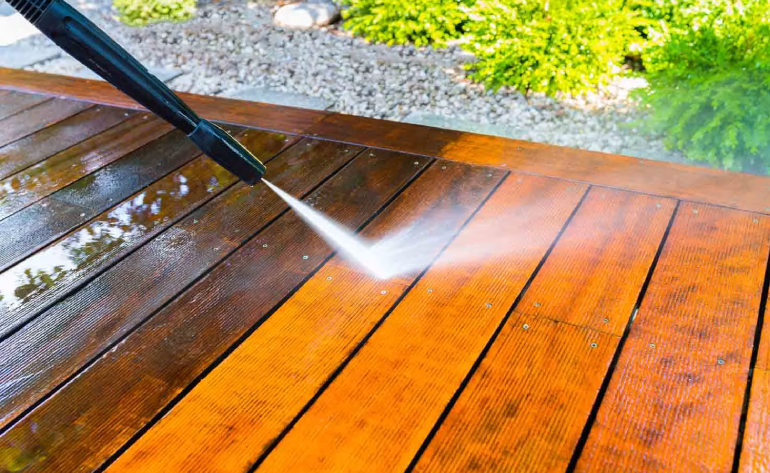
Why patio cleaning in Littlehampton needs a local, surface-aware approach
Littlehampton combines a working riverfront and seafront with established residential neighbourhoods. Parts of the town contain substantial Edwardian homes and formal terraces, while other areas are characterised by bungalows, family houses and later development.
Coastal air, river humidity, wind and periods of shade can create different cleaning issues across the town. Open seafront surfaces collect salt and airborne dirt, while tree-lined or enclosed residential areas are more prone to moss, algae and damp organic film.
Patios behind Littlehampton’s terraces and family homes can be strongly shaded by extensions, fences and mature planting. Slower drying encourages green algae and lichen, particularly around the edges of furniture and pots.
We clean with the garden in mind: pointing, beds, lawn edges and drainage are assessed alongside the paving. Where the patio contains older slabs or mixed repairs, technique is adjusted by section instead of assuming the whole terrace is uniform.
Local coverage around Littlehampton
We quote work across Littlehampton seafront, South Terrace and the roads behind the coast, East Street, River Road, Wick and surrounding neighbourhoods. The exact method is based on the property and surface rather than a postcode assumption.
Common problems this service is used for
Customers usually contact us because the surface has gradually changed rather than because of one isolated mark. Typical issues include:
Surfaces we assess for patio cleaning
The list below is a guide, not permission to use the same method on every material. Age, repairs, coatings and joint condition can change what is safe even when two surfaces have the same broad name.
The technical details matter more than maximum pressure
Black spot is a common name for dark lichen growth seen on many patios. It is not always surface dirt, and aggressive pressure alone can damage softer paving before it fully removes the growth. Treatment choice, dwell time and the condition of the stone matter, and some staining may improve progressively rather than instantly.
Garden patios also demand more care around runoff than an open driveway. We consider beds, lawns, ponds, drainage channels and neighbouring walls when planning the clean, particularly if any treatment product is involved.
How we approach patio cleaning in Littlehampton
Identify the paving
We look at slab type, pointing, level changes, drainage, previous sealing and the condition of garden edges before deciding on a method.
Protect the surroundings
Movable furniture and pots are cleared where possible, and planting, doors, low vents and decorative finishes are considered before treatment or pressure cleaning.
Clean methodically
The patio is worked in controlled sections so the finish is consistent and joints are not needlessly attacked in pursuit of a brighter colour.
Treat persistent growth if suitable
Where lichen or organic growth remains rooted into the surface, a compatible treatment may be more appropriate than repeated high-pressure passes.
Final rinse and handover
We rinse and tidy the work area, then explain any drying time, jointing requirements or maintenance advice that applies to the specific paving.
Property considerations around Littlehampton
Render, pebble-dash, brick and painted elevations all occur locally, together with clay-tile and slate rooflines on older homes and modern hard landscaping around newer properties. Mature trees in some streets add leaf debris and shade to drives and patios.
That variety is why we quote from the actual job rather than a generic square-metre promise. Access, water control, furniture, planting, surface defects and the relationship between the area being cleaned and the rest of the building all affect how the work should be planned.
Other exterior cleaning services in Littlehampton
This page is deliberately focused on patio cleaning. For a broader property clean, use the Littlehampton exterior-cleaning hub or the related local services below.
Read our main Pressure washing across Sussex page for the method, suitable surfaces and service-wide FAQs.
Patio cleaning near Littlehampton
We also cover nearby areas from our East Wittering base. If the property is just outside Littlehampton, the nearest dedicated pages are linked below.